If your AI product renders keep changing the product you uploaded, Subscription AI image generators may be losing important product details.
You start with a clear photo of the item you actually sell. Next, you describe the scene you want and ask the Subscription AI service to generate several versions.
Some of those images can look excellent at first glance. The lighting may look professional, the background may fit your brand, and the composition may seem ready for an ad.
Then you compare the rendered product with the real one.
Maybe the package is a little taller than it should be. Perhaps the label sits too high. The logo may be misshapen, or the bottle, box, jar, or other container may have the wrong proportions. A color that looked right at first can turn out to be noticeably different from the real packaging. Small features such as seams, caps, buttons, handles, print details, or surface textures can also change.
Those errors are why inaccurate AI product renders can be unusable for real product marketing.
People often call these images “AI product photos.” More accurately, they are AI-generated product renders created to resemble traditional product photography. If the render does not match your SKU, the image is inaccurate even when the setting looks convincing.
Writing another version of the prompt may help, but it does not always solve the underlying problem.
Why Do AI Product Renders Look Wrong in Subscription AI Tools?
Most Subscription AI image generators rely on image models designed to handle an enormous range of subjects.
A customer might ask the same Subscription AI service to create an athletic-shoe ad. The next request could be a medieval landscape. A third user might ask for furniture, cosmetics, food packaging, portraits, or an illustration.
Because those image models cover many subjects, they learn broad visual patterns instead of the details of your exact SKU. They do not automatically know every visual feature of the specific product sitting in your warehouse.
That gap is where many product errors begin.
When you upload a product photo, the Subscription AI tool can use that image to guide the generation. Depending on the Subscription AI service, it may preserve the overall shape, colors, package type, and visible branding.
What it usually does not gain from one uploaded reference is a detailed, reusable understanding of the product across different angles, lighting, and styles.
The image model still has to create a fresh image from the information it has.
During that process, it can rebuild parts of the product differently from one generation to the next. One version may preserve the label while another gets the shape right and changes the cap.
So an image can look professionally made and still show details that do not exist on the real product.
That is why polished AI product renders from Subscription AI services can still be inaccurate representations of what you sell.
Why Better Prompts Still Fall Short
When a Subscription AI tool changes part of your product, rewriting the prompt feels like the obvious place to start.
You might tell the Subscription AI service exactly what must stay unchanged:
- Keep the packaging shape exactly as shown.
- Leave the label in its original position.
- Reproduce the logo without changing its design.
- Match the proportions of the reference product.
- Use the same packaging colors as the source image.
- Preserve the physical design of the product.
Those instructions can improve a generation.
However, fixing one detail does not guarantee the rest of the product will stay correct.
You may get a better logo and a worse bottle shape. On the next attempt, the bottle may improve while the label slides out of place. A third generation might finally hold the label and shape while giving the packaging a different finish.
That is why AI product renders can improve in one area while becoming less accurate somewhere else.
A prompt is good at describing the image you want the Subscription AI service to generate.
However, a prompt is much less reliable for teaching an image model every identifying detail of one specific product.
You can describe a bottle, package, shoe, handbag, appliance, or piece of furniture in words. Even a detailed description cannot capture every measurement, contour, print position, surface finish, material cue, and identifying feature.
For a physical product, those identifying details may include:
- the exact proportions of the product,
- where the label begins and ends,
- the size and position of the logo,
- the texture of the surface,
- the shape of a cap, lid, closure, or handle,
- the construction of the packaging,
- whether the finish is matte, glossy, metallic, or translucent,
- how the colors relate to one another,
- where printed elements sit on the package,
- and the small design details customers would recognize.
There is only so much of that information you can reliably control by adding more instructions to a prompt.
Eventually, rewriting the prompt stops addressing the main reason the product keeps changing.
The image model needs a better understanding of the product itself.
The Real Cost of Inaccurate AI Product Renders
An inaccurate AI product render can create practical problems long before anyone worries about whether the image looks artistic.
If you sell physical products online, your marketing should show the same product customers can actually order.
Once the Subscription AI service changes recognizable details, the render becomes harder to use with confidence.
That can cost you time and leave you with fewer images you can actually publish.
Wasted Generations
It is easy to burn through 10, 20, or more generations while searching for one accurate render.
After several rounds, choosing an image feels less like art direction and more like finding the version with fewer mistakes.
Every failed attempt takes time. It can also use up paid credits, generation limits, or other allowance on your Subscription AI plan.
More Editing After Generation
Even a beautiful render may need substantial cleanup before you can use it.
You may have to restore the label, replace the logo, correct colors, repair shapes, or composite in original product details.
At that point, the Subscription AI service that was supposed to save production time has created another retouching job.
Product Changes Across a Campaign
The inconsistency becomes harder to ignore when you are creating an entire set of campaign images.
A campaign may need a hero image, lifestyle renders, paid ads, social posts, email graphics, and seasonal creative.
If the Subscription AI service rebuilds the product each time, customers may see different-looking versions of the same SKU.
One image might nail the label but stretch the package. Another might get the package shape right and shift the brand color.
Together, those AI product renders can look polished while failing to show one consistent, accurate product.
Reference Images and Product-Specific Training Are Different
This distinction makes the rest of the workflow easier to understand.
Uploading a reference photo to a Subscription AI image generator differs from training an AI image model on your product.
When you upload a reference, the Subscription AI service gets a general understanding of your product – which leads to VERY inaccurate generations – whether that be bad proportions, missing label artwork, or just text that looks like alien hieroglyphics.
Across those photos, the image model gets multiple views of the same subject.
That gives it a chance to learn details such as:
- the overall shape,
- the product’s proportions,
- the structure of the package,
- the position of the label,
- the relationship between brand colors,
- the materials used on the product,
- the way important surface details look,
- and the features that make that SKU recognizable.
The goal is to teach the image model what the real product looks like before creating finished marketing renders.
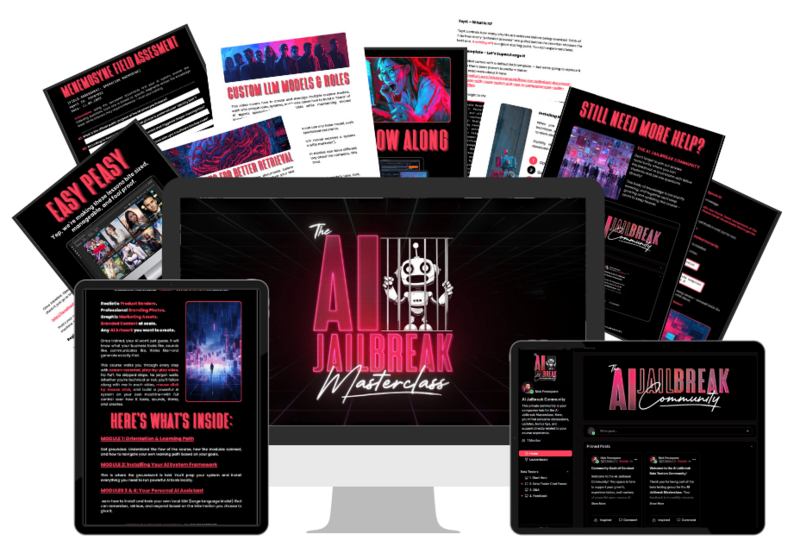
This is the exact process I teach in The AI Jailbreak Masterclass.
The course focuses on keeping the real product accurate and consistent across the images you generate.
You learn to create AI product renders that stay much closer to your product photos and real inventory.


How Product-Specific Training Improves Accuracy
The training process starts with photographs of the real product from your inventory.
Those images become examples the AI image model can learn from.
After training, the marketing images you generate are still AI product renders. They are rendered scenes created to resemble traditional product photography.
Keeping those two things separate avoids a lot of confusion.
The real photos teach the image model what the product looks like. The later renders use that learned information in new scenes, backgrounds, compositions, and marketing concepts.
Because the image model has seen multiple product photos, it has more evidence about which details should stay consistent.
That is a better starting point than giving a Subscription AI service one reference whenever you need new creative.
The quality of your training photos still matters.
If source images hide important details or show the product inconsistently, the image model receives less reliable information. A clear set of varied product photos gives it a much better view of the item.
What Training Can and Cannot Fix
Training an AI image model does not guarantee that every generation will match the real product perfectly.
The image model is still generating a new image each time.
Some generations will naturally be more accurate and useful than others.
Depending on the final image, you may still make small corrections to colors, edges, labels, or other details.
However, training changes the quality of the starting point.
With a general-purpose image model inside a Subscription AI service, much of your time may go toward correcting product changes.
With a product-specific AI image model, you can spend more time deciding how you want to present the item.
For example, you can focus on the location, lighting, camera angle, background, mood, and overall creative concept.
That moves your attention back to making marketing images instead of repeatedly repairing the product.
Why Consistent AI Product Renders Matter
Getting one strong image is useful.
Most stores, however, need the same product to appear in many different images over time.
The same product may appear on product pages, paid ads, email campaigns, social media, promotions, and seasonal launches.
So the harder test is whether the product keeps looking like itself from one render to the next.
Can you generate several AI product renders without the label, proportions, colors, packaging, or other identifying details changing every time?
That is where training a product-specific AI image model becomes especially useful.
You do not need to reintroduce the product to a Subscription AI image generator whenever you want another image.
Instead, you already have an image model that has learned from a collection of photos of that specific item.
That makes it easier to create new marketing scenes while keeping the product itself more consistent.
When Product-Specific Training Makes Sense
You do not need to train a product-specific AI image model for every visual your business creates.
A Subscription AI image generator can work well for backgrounds and concepts where exact product identity does not matter.
Training becomes worth considering when the product has to stay accurate across repeated generations.
It is especially useful when you:
- sell a physical product online,
- need diverse marketing images and assets,
- run paid advertising that requires fresh creative,
- publish product content on social media regularly,
- want lifestyle scenes that would be expensive or difficult to photograph,
- test several campaign concepts around the same product,
- or keep repairing the same product details after using Subscription AI tools.
The more often customers see the same SKU, the more useful a trained product-specific AI image model can become.
Learn How to Create More Accurate AI Product Renders
If your Subscription AI service keeps changing the product, its image model needs better product-specific information.
Inside The AI Jailbreak Masterclass, I show you how to train reusable product-specific AI image models with real product photos.
You will learn a workflow that keeps your AI product renders closer to the real SKU across scenes and campaigns.
The goal is straightforward:
When someone sees your AI-generated product render, the product should look like the one they can actually buy.
That is what makes the render useful for real marketing.
Learn more at: www.aijailbreakmasterclass.com